Massage therapy · Pain guide
Neck and Shoulder Pain: Can Massage Help?
Desk work, stress and poor sleep leave millions with tight necks and shoulders. Here is what massage can and cannot do about it — and the red flags to know.
Neck and shoulder tension is one of the most common reasons people book a massage. Hours at a desk, phone scrolling, stress and awkward sleep positions all load the same small group of muscles — and when they stay guarded for weeks, everyday movement starts to feel restricted.
Massage is a reasonable option to try for this kind of muscular tension. But it helps to know what it can plausibly do, what matters more, and when pain is a warning sign instead.
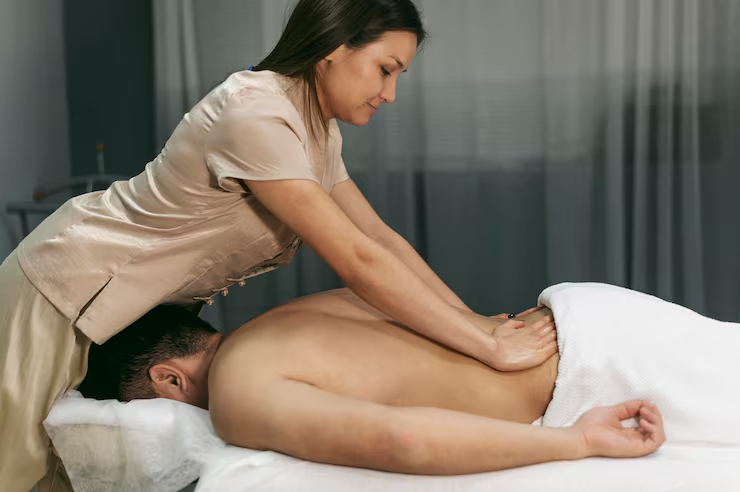
Why the neck and shoulders seize up
The usual suspects are unglamorous: sustained postures (desk, driving, phone), stress-related muscle guarding, poor sleep positions, and deconditioned supporting muscles. The upper trapezius and levator scapulae — the muscles running from neck to shoulder — do a disproportionate share of the work and complain first.
Most such pain is mechanical and benign, meaning it relates to how tissues are loaded rather than to serious disease. That is exactly the category where massage is most plausibly useful.
What research says about massage for neck pain
Studies reviewed by the U.S. National Center for Complementary and Integrative Health suggest massage may provide short-term relief for neck and shoulder discomfort, though the certainty of evidence is low and it is not consistently better than other active approaches such as exercise. In plain terms: it may help you feel better for a while, especially combined with movement — it is unlikely to fix the problem alone.
What a session targets
A therapist treating neck and shoulder tension typically works through the upper back, shoulders and neck, sometimes including the chest and arms, since tightness rarely lives in one muscle. Expect:
- assessment of how your neck and shoulders move and where tension sits;
- gradual pressure — the neck is sensitive, so skilled work here is careful, not forceful;
- no aggressive cracking or yanking — especially around the neck, forceful manipulation carries real risk;
- guidance on self-care: heat, gentle mobility, workstation tweaks.
Self-care that multiplies the benefit
- Break up desk time: stand, roll the shoulders and look around every 30–45 minutes.
- Raise your screen to eye level so your neck is not craning down for hours.
- Gentle chin tucks and shoulder rolls daily — boring, effective.
- Manage stress: guarded muscles and a wired nervous system feed each other.
- Sleep with a pillow that keeps your neck neutral, not cranked up or flat.
Red flags — seek medical care, not massage, if you have:
- neck pain after significant trauma (fall, crash, sports impact);
- numbness, tingling or weakness spreading into the arm or hand;
- loss of grip strength or dropping objects;
- fever with severe neck stiffness;
- severe headache with neurological symptoms, or pain that steadily worsens despite rest.
Frequently asked questions
How many sessions will I need?
There is no fixed number. Try a short plan of 2–3 sessions, measure a concrete outcome (e.g., turning your head while driving), and continue only if it helps.
Is it normal to feel worse the next day?
Mild tenderness can happen, but significant worsening is not normal — tell the therapist and reconsider the approach rather than pushing through.
Can massage fix my posture?
No — massage cannot permanently change posture. It may reduce the discomfort that comes with sustained postures, while movement and ergonomics do the lasting work.
Sources
- NCCIH — Massage Therapy: What You Need to Know
- Cleveland Clinic — Therapeutic Massage: What It Is and Potential Benefits
Medical disclaimer: This article is general education, not personal medical advice. Consult a qualified health professional about persistent or concerning neck or shoulder pain.