Massage therapy · Technique guide
Deep Tissue Massage: Benefits, Techniques and What to Expect
Deep tissue massage uses slow, focused pressure to work on deeper muscle layers. Here is what it may help with, what a session feels like, and how to stay safe.
Deep tissue massage is one of the most requested massage styles — and one of the most misunderstood. Many people assume it simply means “harder pressure,” but skilled deep tissue work is really about slower, more focused pressure aimed at deeper layers of muscle and connective tissue, not about enduring pain.
It is commonly chosen for persistent muscle tension, stiff shoulders, a tight lower back, or the kind of knots that do not ease with gentle massage. But it is not right for everyone, and more pressure is not automatically better.
How deep tissue differs from Swedish massage
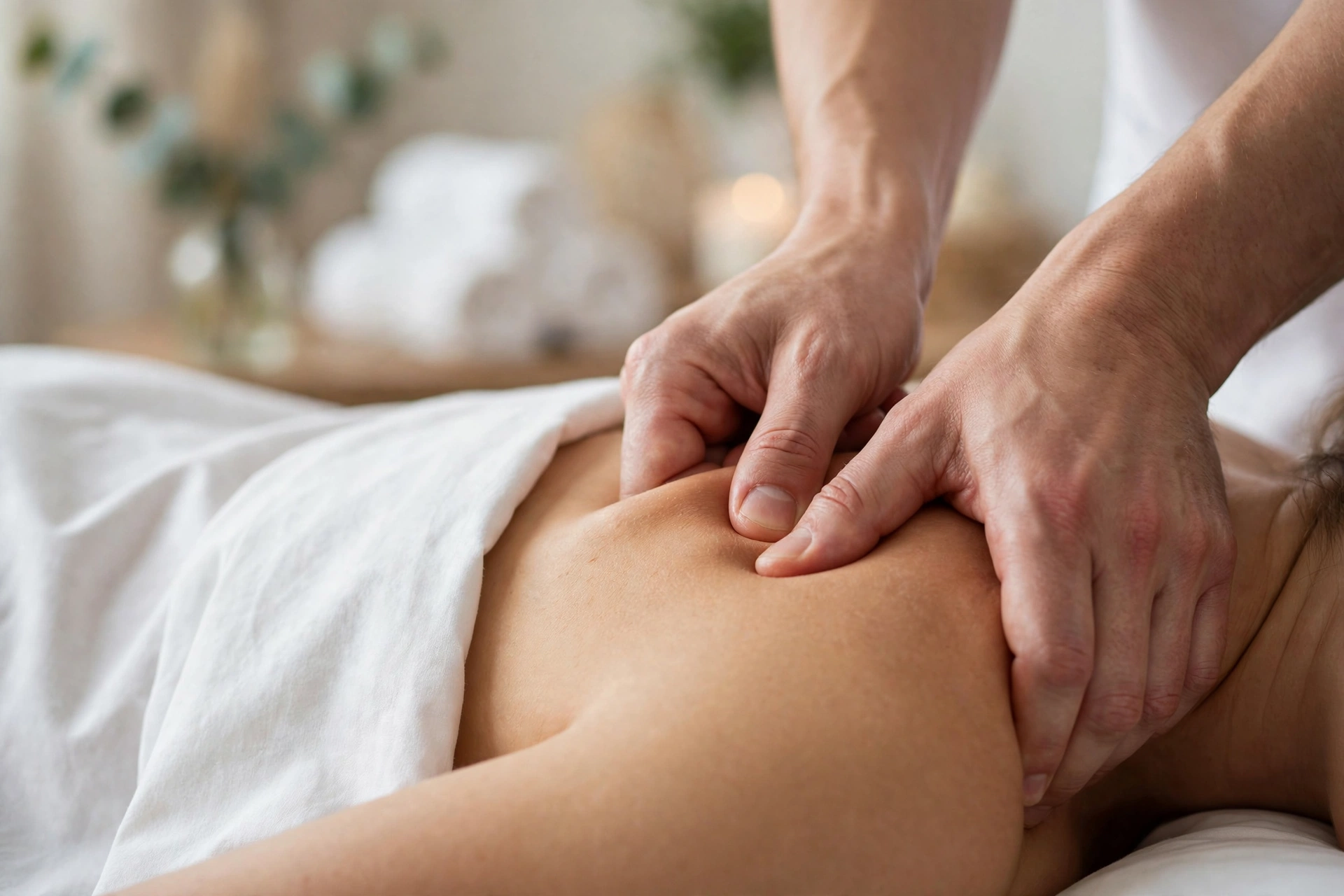
Swedish or classical massage generally uses flowing strokes, kneading and rhythmic movements, often for overall relaxation. Deep tissue massage borrows some of the same strokes but applies them more slowly and with more concentrated pressure, sometimes using forearms, elbows or knuckles to reach deeper layers.
A session usually starts with lighter warming strokes before the therapist gradually works deeper. The pace is deliberately slow — rushing deep pressure over cold muscles is a recipe for soreness and guarding, not relief.
What the evidence says
Research on massage for pain conditions such as low-back, neck and shoulder pain suggests benefits are generally modest and short term, according to the U.S. National Center for Complementary and Integrative Health (NCCIH). Some people report less tension and easier movement for days after a session, but massage has not been shown to be consistently better than other active treatments, and it cannot fix structural problems.
What a session feels like
Expect a short consultation first: your symptoms, health history, medication and areas to avoid. The therapist should explain the plan and check pressure continuously. You undress only to your comfort level, in private, and a sheet or towel keeps you covered except for the area being treated.
Deep work can feel intense — a “good ache” is common — but it should stay tolerable. Sharp, burning, electrical or spreading pain is a signal to reduce pressure immediately. A professional therapist will adapt without argument; never feel you must endure pain to get results.
Safety: who should be careful
Check with a clinician first if you:
- take blood thinners or bruise easily;
- have severe osteoporosis, fragile bones or a recent fracture;
- have a blood-clotting disorder or a known clot;
- have recent surgery, open wounds, burns or skin infection;
- are pregnant — positioning and pressure need modification;
- have cancer, an implanted device or ongoing medical treatment.
Mild soreness for a day or two after firmer work is common. But worsening pain, significant swelling, numbness, weakness or unusual bruising deserve medical attention, not another massage.
Getting the most from your session
- Describe your goal in one sentence: “my right shoulder stays tight at my desk.”
- Agree on pressure using a simple 1–10 scale, and speak up if it drifts.
- Ask the therapist to explain what they are doing and why.
- Choose a measurable outcome and reassess after 2–3 sessions.
- Do not pre-book a long series before knowing whether it helps you.
Frequently asked questions
Does deep tissue massage have to hurt to work?
No. Intensity without control is not more effective. Tolerable, focused pressure with good communication gives the best results.
How often should I go?
There is no fixed schedule. Base frequency on your goal and response — try a short plan, measure the benefit, and continue only if it helps.
Can I exercise after a deep tissue session?
Light movement is usually fine. Give your body a day before intense training if you feel sore, and hydrate normally.
Sources
- NCCIH — Massage Therapy: What You Need to Know
- Cleveland Clinic — Therapeutic Massage: What It Is and Potential Benefits
Medical disclaimer: This article is general education, not personal medical advice. Consult a qualified health professional about whether deep tissue massage suits your health.